

Mill School Bury
BuryTherapy
At Mill School Bury, we directly employ therapists who work collaboratively with students, staff and parents daily. Our therapy team offers staff and parental training as well as delivering 1:1 support for individuals and whole-class sessions.
Therapy is a cornerstone of support for our students with a wide range of needs, including autism, learning and developmental delays, physical disabilities, and emotional, social and behavioural challenges. At Mill School Bury, these therapeutic services are not separate from education—they are woven into the fabric of the school day to help children access learning, build confidence, and thrive socially and emotionally.
Therapists such as occupational therapists, speech and language therapists, and providers of creative or emotional wellbeing therapies work alongside students, teachers, parents and support staff. Interventions might include communication programmes, sensory regulation activities, mobility support, drawing and talking therapy, or sessions with therapy dogs to promote calm and confidence.
Collaboration is central at Mill School Bury: therapists, teachers, and families share strategies so that students experience a consistent and supportive approach across school and home. This joined-up way of working creates a nurturing environment where students can flourish—not just academically, but emotionally and socially—developing the life skills and resilience they need for everyday life.
Occupational therapy

OT’s at Mill School Bury focus on enabling participation in daily activities, independence, and managing sensory needs.
- Assessment: Looking at motor skills, sensory processing, self-care, and participation in learning.
- Sensory Integration & Regulation:
- Identifying sensory processing differences (e.g., over/under-sensitivity to noise, touch, movement).
- Designing sensory diets (structured activities to regulate attention and arousal).
- Recommending classroom adaptations (quiet spaces, weighted items, fidget tools).
- Fine and Gross Motor Skills: Supporting handwriting, scissor use, dressing, coordination, and balance.
- Self-Care & Independence: Helping with skills like toileting, feeding, dressing, and organisation.
- Environmental Adaptations: Advising on seating, lighting, and classroom layout to reduce sensory overload.
- Collaboration with Teachers: Embedding strategies into lessons so students can access the curriculum.
Speech and language therapy
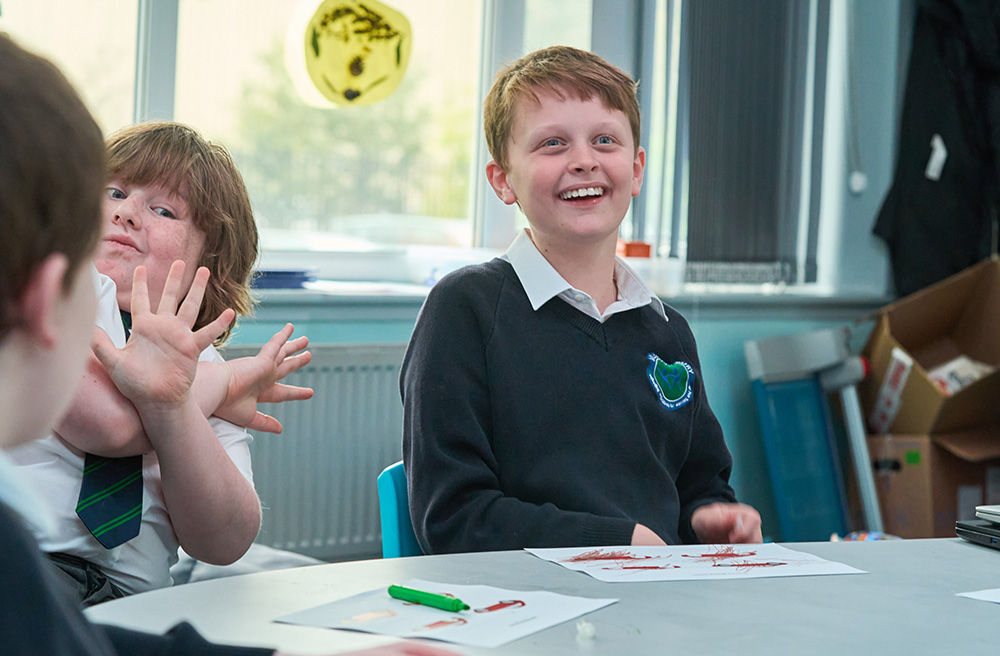
SaLTs support the development of communication, social interaction, and language skills. They adapt approaches depending on the child’s strengths, needs, and stage of development.
- Assessment: Identifying communication abilities, challenges (e.g., understanding, using words, social communication, non-verbal communication), and needs for alternative systems.
- Individualised Intervention:
- Teaching communication strategies (verbal and non-verbal).
- Supporting functional communication (asking for help, making choices).
- Augmentative and Alternative Communication (AAC): Use of communication boards, play charts, PECS (Picture Exchange Communication System), Makaton, speech-generating devices.
- Social Communication Support: Helping children understand turn-taking, conversation, emotions, and perspective-taking. Supporting children’s emotional regulation.
- Classroom Support: Working with teachers to adapt language, simplify instructions, and create communication-friendly environments.
- Staff and Family Training: Ensuring everyone uses consistent strategies to support communication across settings.
Drawing and talking therapy
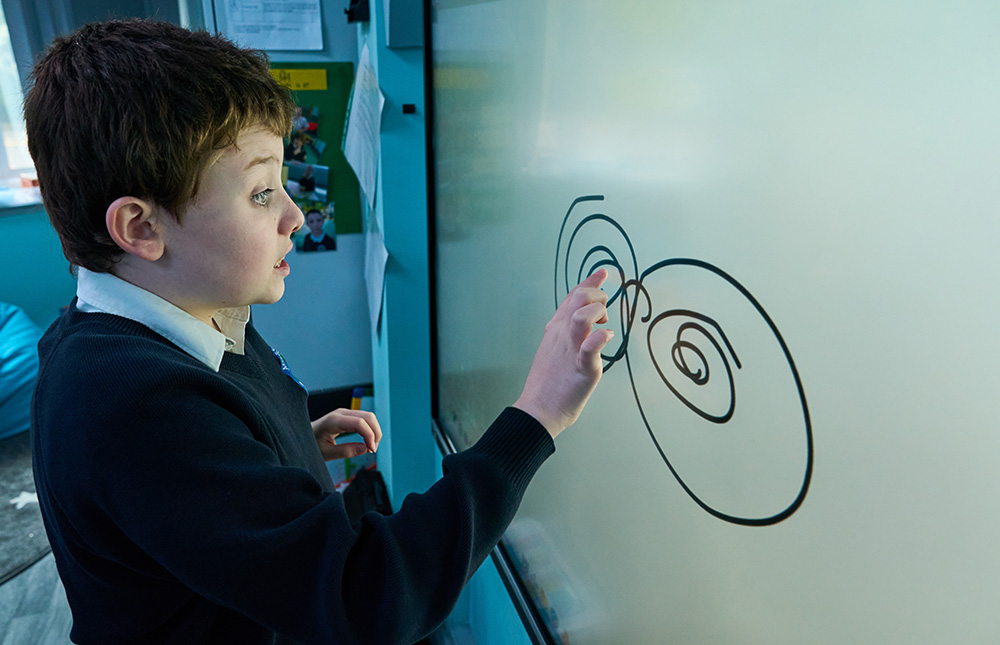
Delivered in Mill School Bury, in weekly 30-minute sessions by a trained TA, usually over 12 weeks. The TA does not interpret the drawings but instead supports the child to tell their own story through art.
- A gentle, non-intrusive therapeutic approach designed for children and young people who may find it difficult to verbalise their feelings.
- It uses drawing as a medium for children to express emotions, experiences, or worries indirectly.
- The focus is not on the quality of the drawing but on the process of expressing and reflecting.
Who is it for?
- Children who may have experienced trauma, loss, anxiety, or emotional difficulties.
- Pupils who struggle to put feelings into words but can communicate more easily through pictures.
- Particularly beneficial in special schools, where children with autism or learning difficulties may find traditional talk therapy challenging
- The child is invited to draw freely about anything they choose.
- The practitioner sits alongside them, showing interest and asking gentle, open questions.
- The aim is to help the child process emotions safely without pressure.
Educational psychology
At Mill School Bury we work with Educational Psychologists to apply psychological support for our students’ learning, development, and emotional well-being. They work with students who have a wide range of needs, including autism, learning disabilities, physical disabilities, and social, emotional, or mental health needs and support the writing of EHC plans.
Key Areas of Input
Assessment and Understanding Needs
- Carrying out cognitive, emotional, and behavioural assessments to understand how a child learns best.
- Observing pupils in the classroom to see how they respond to teaching, peers, and the environment.
- Identifying barriers to learning, whether cognitive, sensory, emotional, or environmental.
- Contributing to Education, Health and Care Plans (EHCPs) with specialist advice.
Supporting Teaching and Learning
- Recommending strategies to differentiate teaching for pupils with complex needs.
- Advising on behaviour support plans and positive approaches.
- Supporting staff with methods to build attention, memory, motivation, and engagement.
Emotional and Social Well-being
- Helping children with anxiety, trauma, or self-esteem issues.
- Recommending interventions such as social skills groups, resilience programmes, or therapeutic play approaches.
- Working alongside counsellors, SALT, OT, and other therapists to provide a joined-up support plan.
Impact at Mill School Bury
- Gain a deeper understanding of pupils’ learning profiles.
- Create strategies that reduce barriers to learning.
- Support staff wellbeing by offering practical guidance for managing complex needs.
- Help children thrive both academically and emotionally.
Therapy dogs

Our therapy dogs are specially trained, calm, and friendly dogs that visit Mill School Burys to support students’ emotional, social, and sometimes physical well-being. They are not the same as guide dogs or assistance dogs (which support one individual) - therapy dogs work with many students in the Mill School Bury environment.
Benefits of therapy Dogs in special schools
Emotional regulation & wellbeing
- Stroking or sitting with a dog can lower stress and anxiety, helping pupils feel calm and safe.
- Dogs provide non-judgmental companionship, which can be especially powerful for children who struggle socially.
Social and communication skills
- Encourages children to talk to the dog, about the dog, or with peers while engaging with the dog.
- Supports turn-taking, sharing, and cooperation in group sessions.
- Provides a natural motivation for using communication systems (PECS, AAC, speech).
Behavioural support
- Can reduce incidents of challenging behaviour by offering a calming influence.
- Some schools use “dog time” as a reward for positive behaviour.
Academic motivation
- Reading aloud to a dog helps pupils practise literacy in a relaxed, pressure-free way.
- Can encourage attendance and participation by making the school feel welcoming and fun.
Sensory benefits
- Provides tactile stimulation through stroking and grooming.
- Helps children who seek deep pressure or calming input through safe physical contact.


